Menu
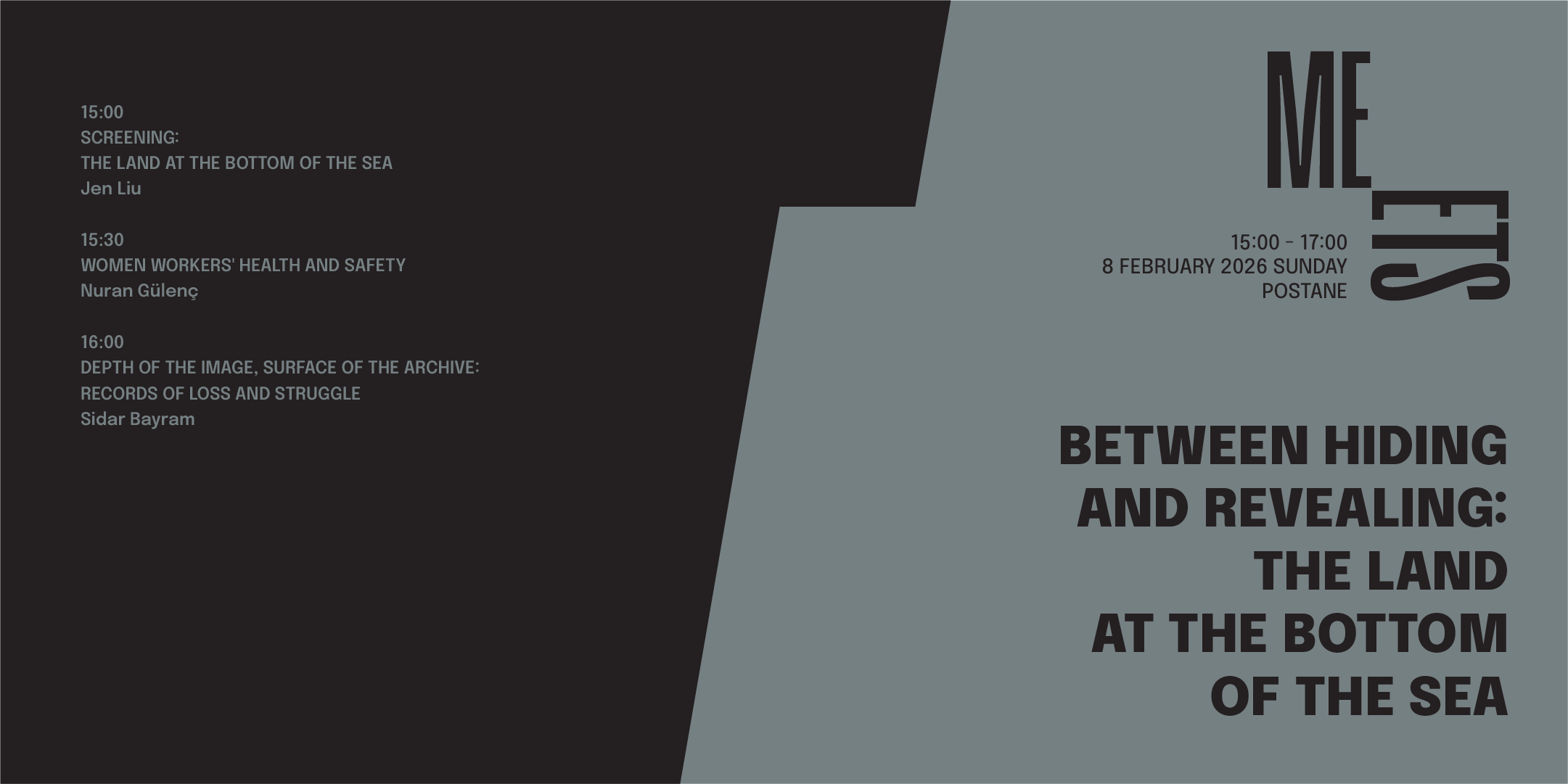
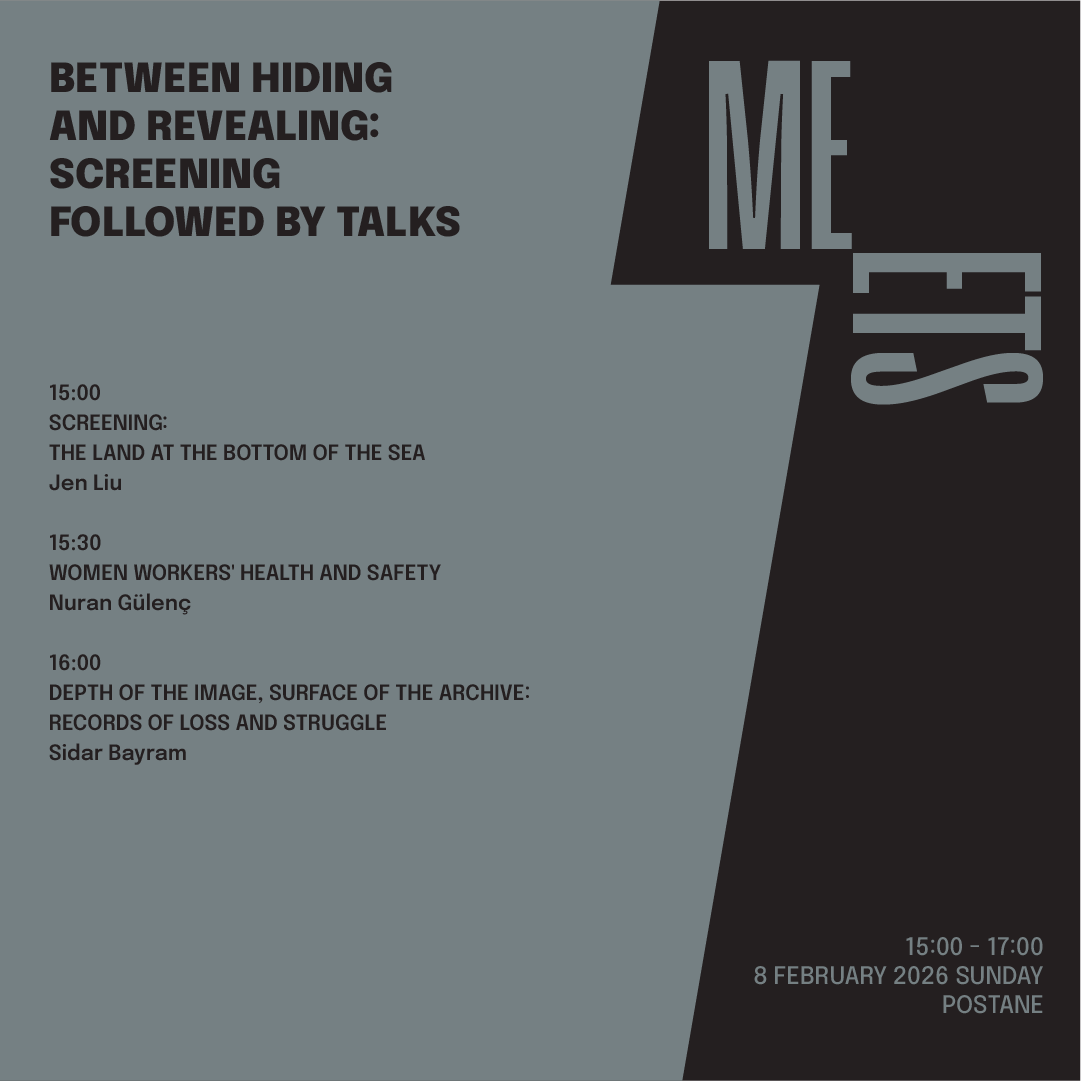
BETWEEN HIDING AND REVEALING: SCREENING OF “THE LAND AT THE BOTTOM OF THE SEA” FOLLOWED BY TALKS
8 February 2026 Sunday
15:00
Postane
- Meets
BETWEEN HIDING AND REVEALING draws inspiration from Jen Liu’s film The Land at the Bottom of the Sea, which is screened online at KIRIK. Addressing the forced disappearance of female workers in China by the government for their activism in the name of labor rights, democracy or public transparency, Liu’s film combines the workers’ first-hand accounts and poems with other archival sources. The film also holds a secret within it. Its digital body contains the archives of the forcibly disappeared female workers, transcripts of tens of thousands of vlogs, screenshots of social media posts and family photographs.
The meeting begins with a screening of excerpts from the film, followed by a presentation by Nuran Gülenç, discussing the effects of the patriarchal structure of working life on the health and safety of female workers. Sidar Bayram then addresses topics such as the relationship between labor struggles and recording and archiving practices, the gesture of transforming the surface from one that displays video to one that preserves it, and the possibilities of relating to archival fragments in the current cultural-political terrain where truth is eroded.
Program
15:00 Screening of The Land at the Bottom of the Sea
15:30 Nuran Gülenç – Women Workers’ Health and Safety
In this talk, Nuran Gülenç discusses the effects of the patriarchal structure of working life on the health and safety of women workers. According to Gülenç’s research, the shaping of worker health and safety policies based on the experiences of male-dominated sectors such as mining, construction, and metal —from workplace environments to protective equipment design—often renders women’s specific needs invisible. The concentration of women in jobs considered “suitable for women” leads to the underestimation of risks and inadequate precautions, while protective regulations are largely limited to pregnancy. Women, who have to bear the burden of domestic care alongside paid labor, suffer greater physical and mental exhaustion and are exposed to higher risks in precarious and informal jobs. Furthermore, male violence and harassment are significant occupational health and safety issues that are not adequately addressed. Given the increasing employment rates of women, the urgency of gender-based and inclusive occupational health and safety policies becomes even more apparent.
16:00 Sidar Bayram – Depth of the Image, Surface of the Archive: Records of Loss and Struggle
According to Sidar Bayram, Jen Liu’s video work The Land at the Bottom of the Sea raises a series of important questions and productive discussions about archival practices and the world of recording/documentation. In his talk, Bayram addresses the different trajectories and paths of discussion that were taken while making the video, rather than interpreting the video itself. Inspired by the artist’s project, he touches on various topics such as the relationship between labor struggles and archival practices, the structural and visible forms of exploitation and violation, the physical and factual dimensions of violence, the gesture of transforming the video into a surface that preserves rather than displays it, methods of coding and manipulating archival materials and the possibilities of relating to archival fragments in the current cultural-political terrain, where truth is eroded.
Nuran Gülenç completed her master’s degree at Üsküdar University’s Occupational Health and Safety department with a thesis titled “The Role of Trade Unions in Occupational Health and Safety: The Case of the United Metal Workers’ Union” after completing her education at Hacettepe University’s Zonguldak Mining Engineering department. She has served as an expert, auditor and trainer at institutions such as the Turkish Leather Workers’ Union, the Fair Wear Foundation and the Turkish Petroleum Workers’ Union. She currently works as an expert in the Equality Department at the United Metal Workers’ Union.
Sidar Bayram is a researcher working with audiovisual media and archives. His research focuses on how recording practices and material remains shape claims to public truth in the context of social struggles. He works in the fields of media archaeology, archival practices, forensic sciences, investigative aesthetics, audiovisual information forms, material infrastructures and the sociology of emotion. Among the books he has edited and translated are Çatışmayı Kaydetmek: Arşivler, İnsan Hakları ve Toplumsal Mücadeleler [Recording Conflict: Archives, Human Rights, and Social Struggles] (with Duygu Doğan) and Eyal Weizman’s The Least of All Possible Evils: A Short History of Humanitarian Violence.