
Menu
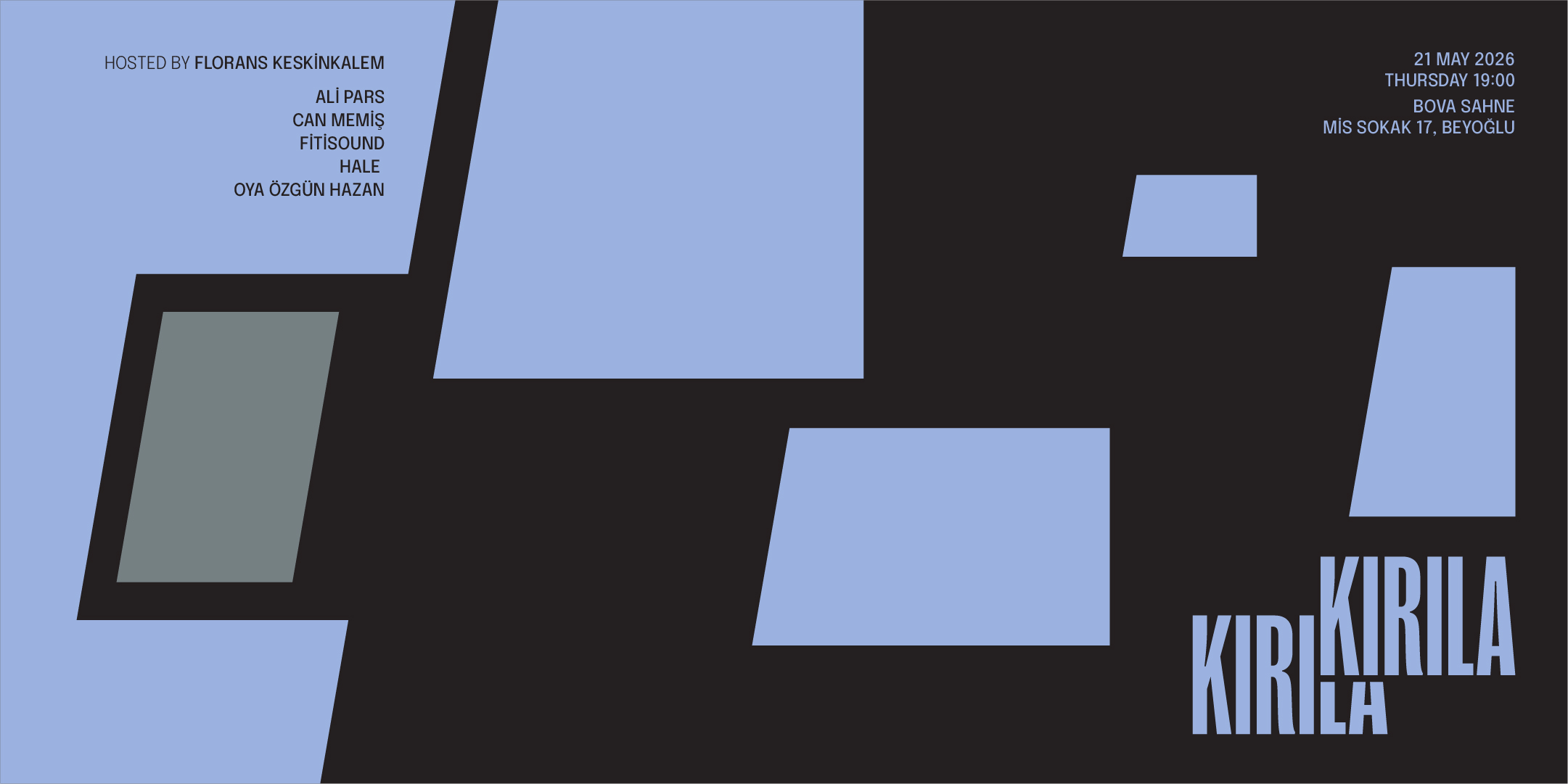
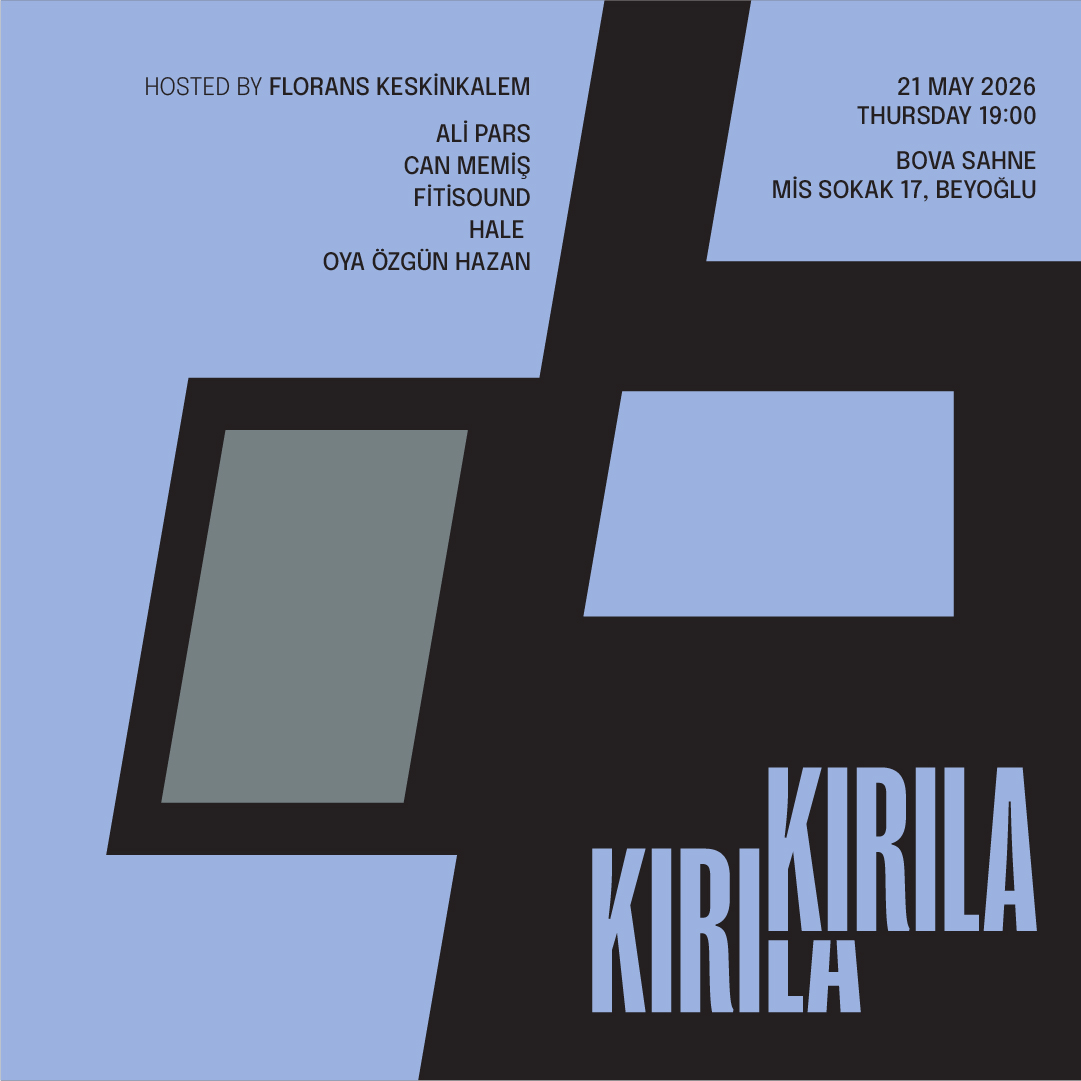
KIRIK is launching a new series of programs.
Because some issues can no longer be expressed merely through words,
but through the body,
voice,
breath,
poetry,
music,
and moments of pause.
KIRILA KIRILA was born out of this need.
In this program, we invite our guests not to engage in lengthy debates on a topic, but to share fragile emotions and situations in a performative way. Each will take the microphone for about ten minutes; they will speak, read, play, or fill that moment in whatever way they choose.
Our topics are diverse: We might start with the tension between trying to survive under pressure and the insistence on resistance. Why do we continue to create, act, and stay in this country, even knowing that we’ll get into trouble and that life won’t be comfortable?
Despite all our persistence, there are struggles, institutions, and debates that have fallen by the wayside—sometimes due to oppression, sometimes because we’ve told ourselves, “Now is not the time.” We want to address issues that have lost their foundation, such as the legal system, the media, local governments, and everyday practices of justice.
And perhaps most challenging of all, we must also speak of the future: If we are talking about a chosen or organized vulnerability, is this possible without a vision of the future? Despite all the constraints we face, what kind of world, what kind of city, or what forms of relationships do we imagine?
The KIRILA KIRILA program series seeks to create a space where speech, poetry, music, and the body draw not from expertise but from testimonies and emotions.
Presented by Florans Keskinkalem
Ali Pars
Can Memiş
FitiSound
Hale
Oya Özgün Hazan
Florans Keskinkalem is a performance persona who uses drag as a tool for research, storytelling, and media criticism. While sensing an impending disaster, Florans simultaneously tries to fix her eyeliner; by blending humor, camp aesthetics, and critical narrative, she creates performative broadcasts on current events, queer life, and social issues.
Ali Pars works at the intersection of poetry and performance. He explores the relationship between movement and emotions held within the body, as well as its healing potential. In his poems, a tension circulates between love, anger, compassion, identity, and the body/bodies; he is interested in the spaces where the political and the poetic intersect.
Can Memiş is a researcher who navigates the fields of art, sociology, and law in his work. Sometimes he thinks by writing, sometimes he wanders through archives. For his doctoral research, he chose to follow the practices of activist exhibition.
Ahmet M. Öğüt, also known as FitiSound, reflects on the interplay of sound and image through procedural chance, and enjoys performing his creations in this journey through real-time manipulations.
Hale is an independent curator who loves to deconstruct and reconstruct. She studies the philosophy of the image and perceives the world through images. She makes her struggle visible on the online platform she founded under the name Arsperas.
Oya Özgün Hazan: The poems begin with a bird pushing aside the steel wire meant to prevent perching, causing the wire to fall in front of it. As the bird moves the wire aside to ensure no one gets hurt, it is shaken by the graffiti on the wall depicting people with fishing nets thrown over them. The net wraps around them like meat that’s been vacuum-sealed and placed in a plastic container. She changes her mind. She threads the steel wire through the nylon of the net. Her heart continues to beat from the wall into the street. My biography begins. Our biography begins.